Riding Regions of Thailand
Explore diverse landscapes, rich culture, and unforgettable roads across Thailand's most rewarding riding destinations.
Northern Thailand Climate & Seasons
Weather shapes every ride in Northern Thailand. Use the chart below to plan around rainfall and temperature, then check the seasonal breakdown for what to expect on the road.
Monthly averages for Chiang Mai. Rainfall (blue bars, left axis), daily high (orange) and low (navy dashed) temperatures (right axis).
November – February
Cool Season
The best time to ride. Clear skies, cool mornings (14–19°C), warm afternoons (28–32°C) and almost no rain. Mountain passes around Mae Hong Son and Doi Inthanon are at their finest.
- Pack a light jacket for early-morning rides
- Peak season — book bikes and rooms ahead
- Long viewpoints, no haze, dry tarmac
February – April
Burning / Smoky Season
Agricultural burning across the north reduces visibility and air quality, often pushing AQI into unhealthy levels. Temperatures climb fast through March into April — Chiang Mai regularly hits 35–36°C.
- Check AQI daily before long rides
- Wear a buff or filtered mask
- Ride mornings — afternoons are hottest
April – Mid May
Hot Season
The hottest stretch of the year, with daily highs often above 35°C. The first mango showers begin to clear the haze. Songkran (mid-April) brings water festivities — expect wet roads through towns.
- Hydrate constantly and ride in vented gear
- Plan high-elevation routes for cooler air
- Expect Songkran water-throwing in town centres
Mid May – October
Rainy / Green Season
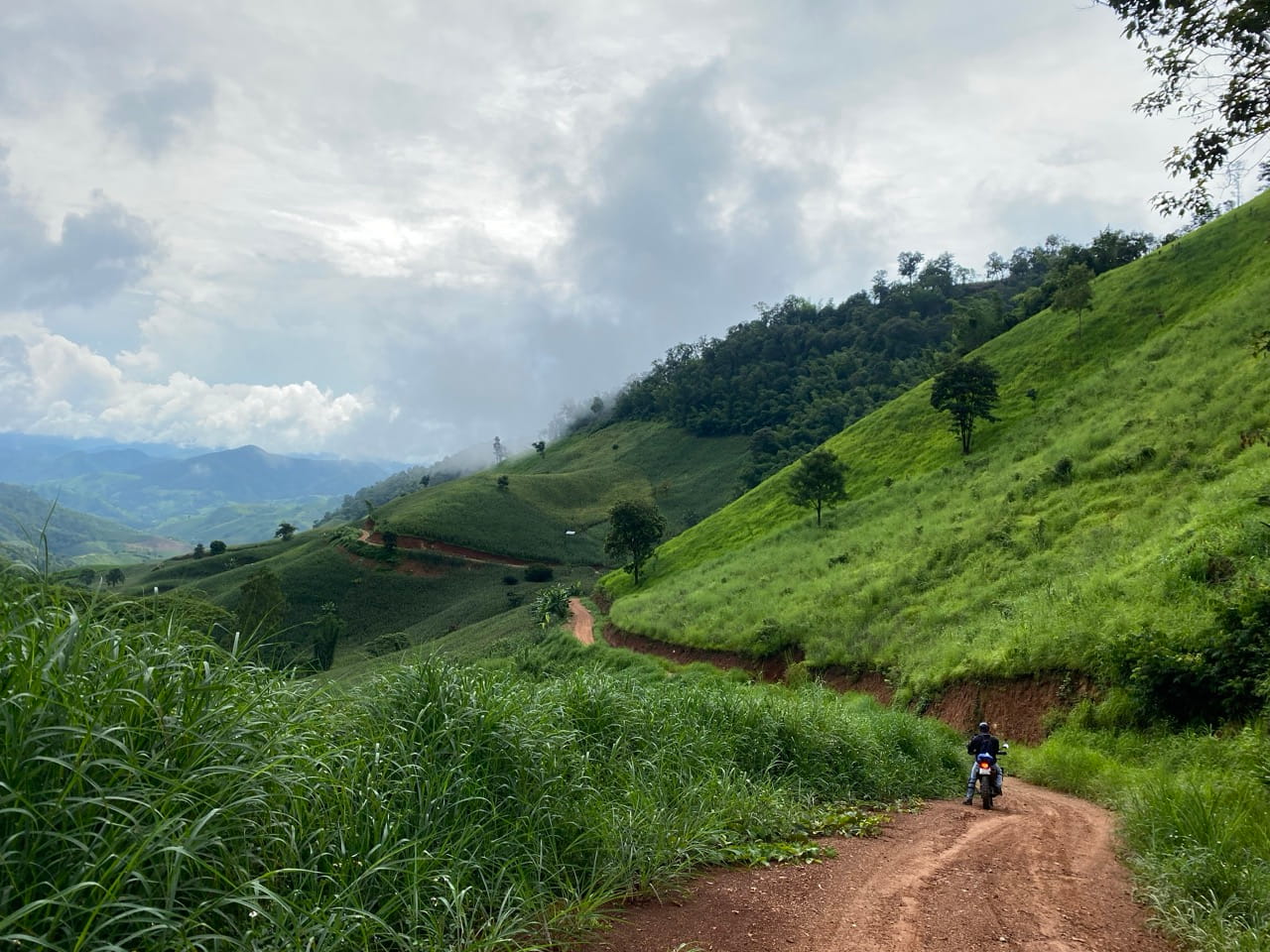
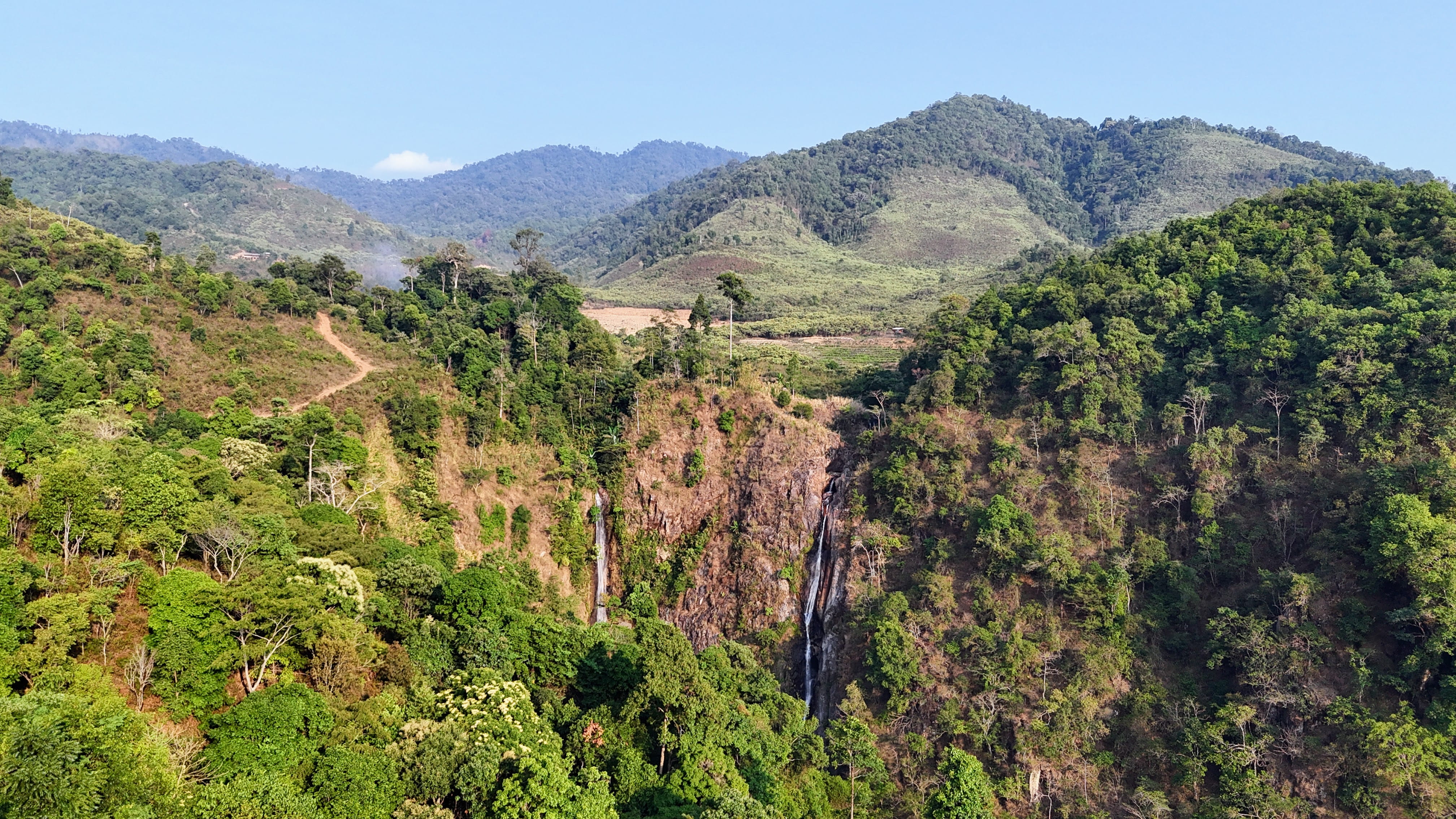
The mountains turn lush and waterfalls run full. Rain is usually short, heavy afternoon thunderstorms rather than all-day downpours, with August and September the wettest months (220–230mm).
- Wait out the first 10–15 minutes of rain — roads are slickest then
- Carry a rain shell; ride mornings when possible
- Check river crossings on dirt routes after heavy rain
Climate data shown is for Chiang Mai and is broadly representative of the northern region. Conditions vary with elevation — Pai, Mae Hong Son and Doi Inthanon are noticeably cooler and wetter than the Chiang Mai valley.